

Reviving a Lifeline: How a Neglected Pond in Uttarakhand Became a Model of Community-Led Water Security


What was once a silted, shallow, and forgotten water body in Uttarakhand has today transformed into a thriving resource that supports hundreds of farming families. Spread across 2.1 hectares, the village pond had gradually lost its capacity to hold water due to years of siltation, poor maintenance, and declining rainfall infiltration. Its storage had dropped to just 10,500 cubic meters, leaving farmers dependent on uncertain monsoons and depleting groundwater.
Everything changed when Partners in Prosperity (PnP) stepped in with a clear mission to restore the pond, rebuild community trust, and create a foundation for long-term water security.
From Silted Pit to Sustainable Resource
Before work began, PnP conducted a detailed hydrological and geographical feasibility study, leading to the development of a comprehensive Entry Point Report. This report analyzed rainfall patterns, soil characteristics, storage potential, and water-harvesting possibilities. It also proposed community engagement strategies, ensuring the intervention would be both technically sound and socially rooted.

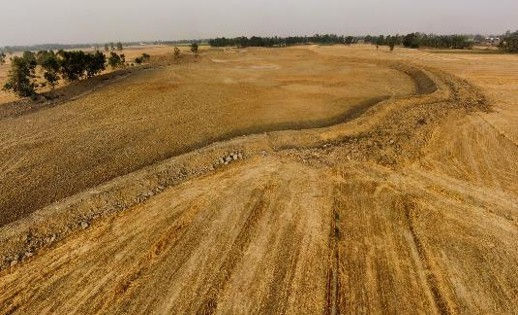
With clear plans in place, PnP undertook deep desiltation and excavation, removing more than 42,000 cubic meters of accumulated silt. This single intervention reshaped the pond’s capacity, structure, and function.
Key Outcomes of the Rejuvenation
· Water-holding capacity increased from 10,500 to 52,500 cubic meters, a fivefold improvement.
· he pond now receives an annual intake of 186,526 cubic meters of water.
· It contributes 72,800 cubic meters of groundwater recharge every year, stabilizing nearby wells and borewells.
· Soil moisture levels in surrounding farms have improved noticeably.
· Farmers report better irrigation access and reduced dependence on external water sources.
What was once a seasonal, nearly dry pit now nourishing crops, replenishes wells, and provides year-round water security.
A Restored Ecological Habitat

The restored pond has also emerged as an important ecological hotspot, breathing new life into the village’s natural environment. With deeper water storage, improved moisture levels, and revived vegetative growth around the embankments, the area has begun attracting a variety of birds, insects, and aquatic species that had disappeared over the years. Native fish populations have started
returning, frogs and beneficial insects now thrive along the water’s edge, and migratory birds have been increasingly sighted during seasonal cycles. This resurgence of biodiversity not only enriches the local ecosystem but also strengthens natural pest control, supports pollination, and enhances overall environmental resilience showcasing how
water restoration contributes far beyond human needs.
A Legacy Handed Over to the People
PnP recognized that true sustainability comes when the community becomes the custodian of its own resources. So, alongside physical restoration, the organization introduced several capacity-building initiatives:
· Training on Water-Efficient Technologies (WETs) such as Alternate Wetting and Drying (AWD), which reduces water use by nearly 30%
· Installation of rain gauges for local rainfall tracking
· Soil testing to help farmers improve crop planning
· Village trainings on water conservation and climate resilience
· Awareness campaigns on the importance of maintaining local water bodies
These efforts helped villagers understand not only the “what” and “how” of water conservation but, more importantly, the “why.”
To ensure continued stewardship, Water & Environment Groups (WEGs) were formed. These groups along with local panchayats now lead the pond’s management, oversee maintenance, and collaboratively plan water-related improvements.
This participatory approach ensured:
· Stronger community ownership
· Equal access to benefits
· Transparency in decision-making
· Long-term sustainability of the rejuvenation efforts
This handover marks the beginning of a new era of decentralized water governance.


Comments